Despace Protocol
A multi-chain DEX: swap, bridge, pools, staking, lending.
Led frontend development of a multi-chain decentralised exchange — swapping, liquidity pools, cross-chain bridging, staking, lending and an NFT marketplace — and re-architected its core modules along the way.
- role
- Frontend engineer · led the DEX front end
- year
- 2022 — 2024
- platform
- Web · Ethereum, BNB Chain, Polygon
- live
- private
- stack
- Next.jsTypeScriptRedux Toolkitweb3-reactethersstyled-componentslightweight-charts
$ ls ./screens
8 screens · scroll →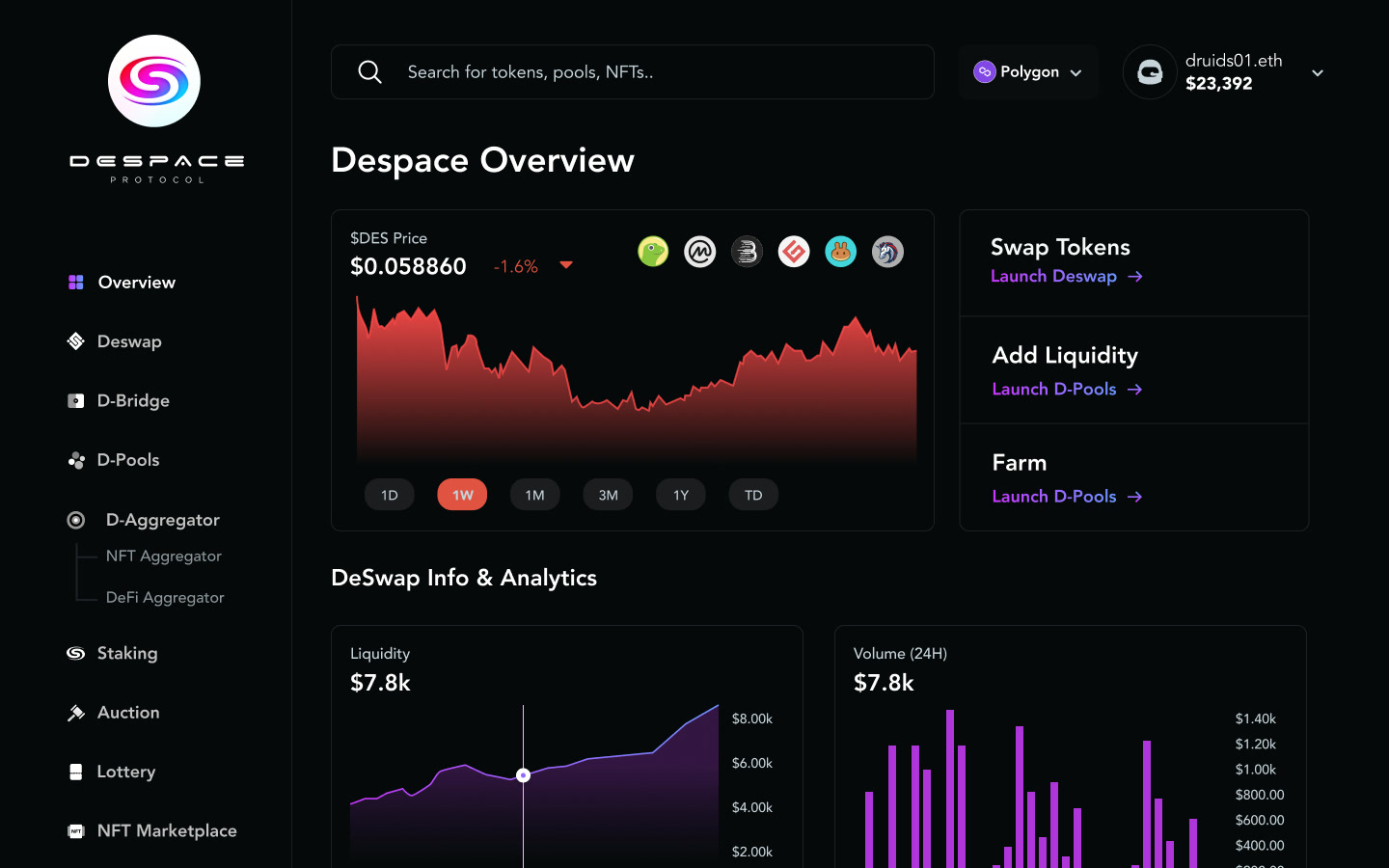
The problem
Despace set out to be one place for a DeFi user's whole day: swap a token, bridge it to another chain, provide liquidity, stake the rewards, borrow against what you hold — and, later, trade NFTs. Each of those is a product on its own, and each one has to speak to several chains and several wallets without the interface falling apart.
What I built
I led frontend development of the multi-chain DEX, on Next.js and TypeScript with Redux Toolkit for app state and web3-react plus ethers for wallets and contracts.
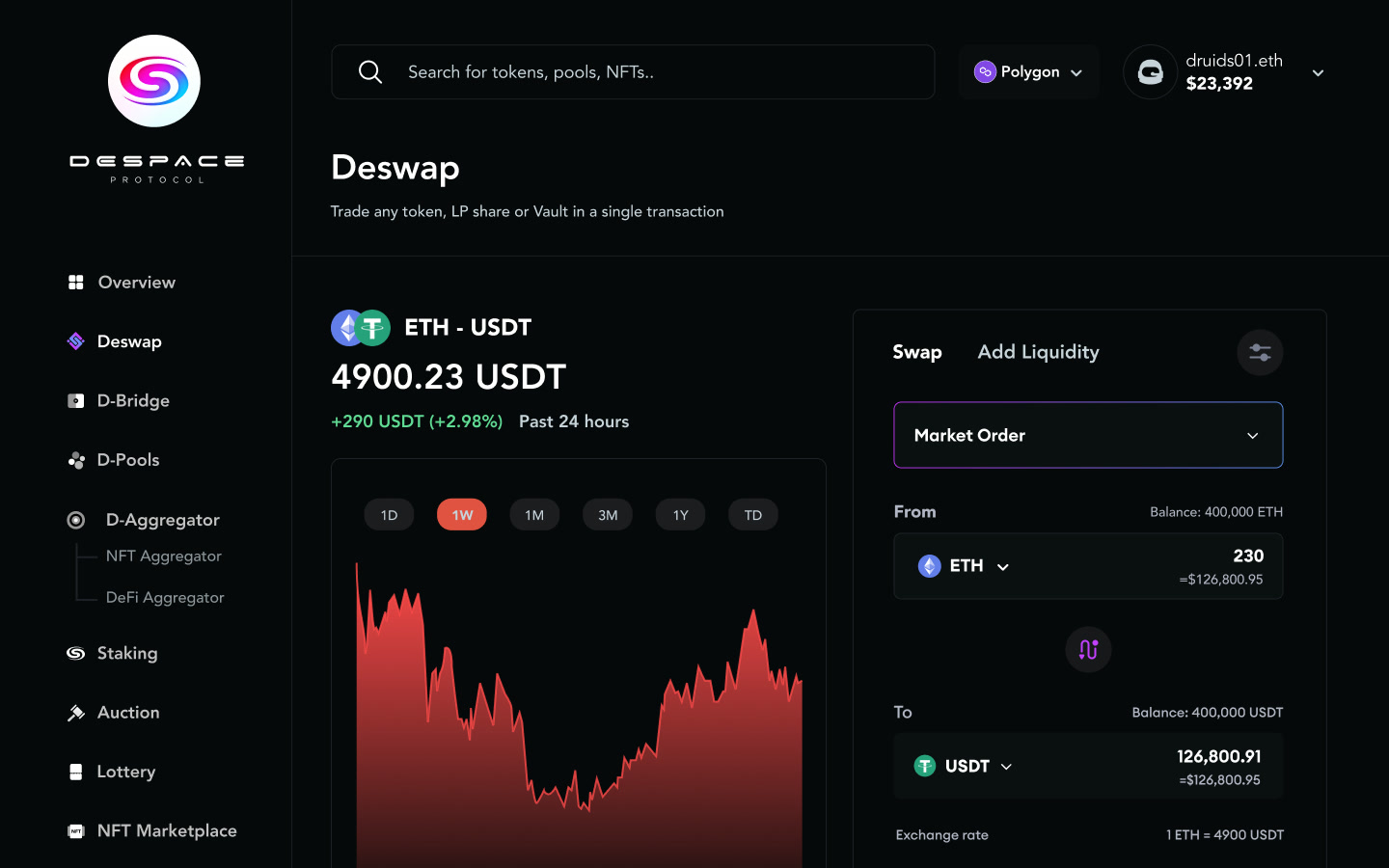
- DeSwap — token swaps with market charts and a swap panel that quotes as you type.
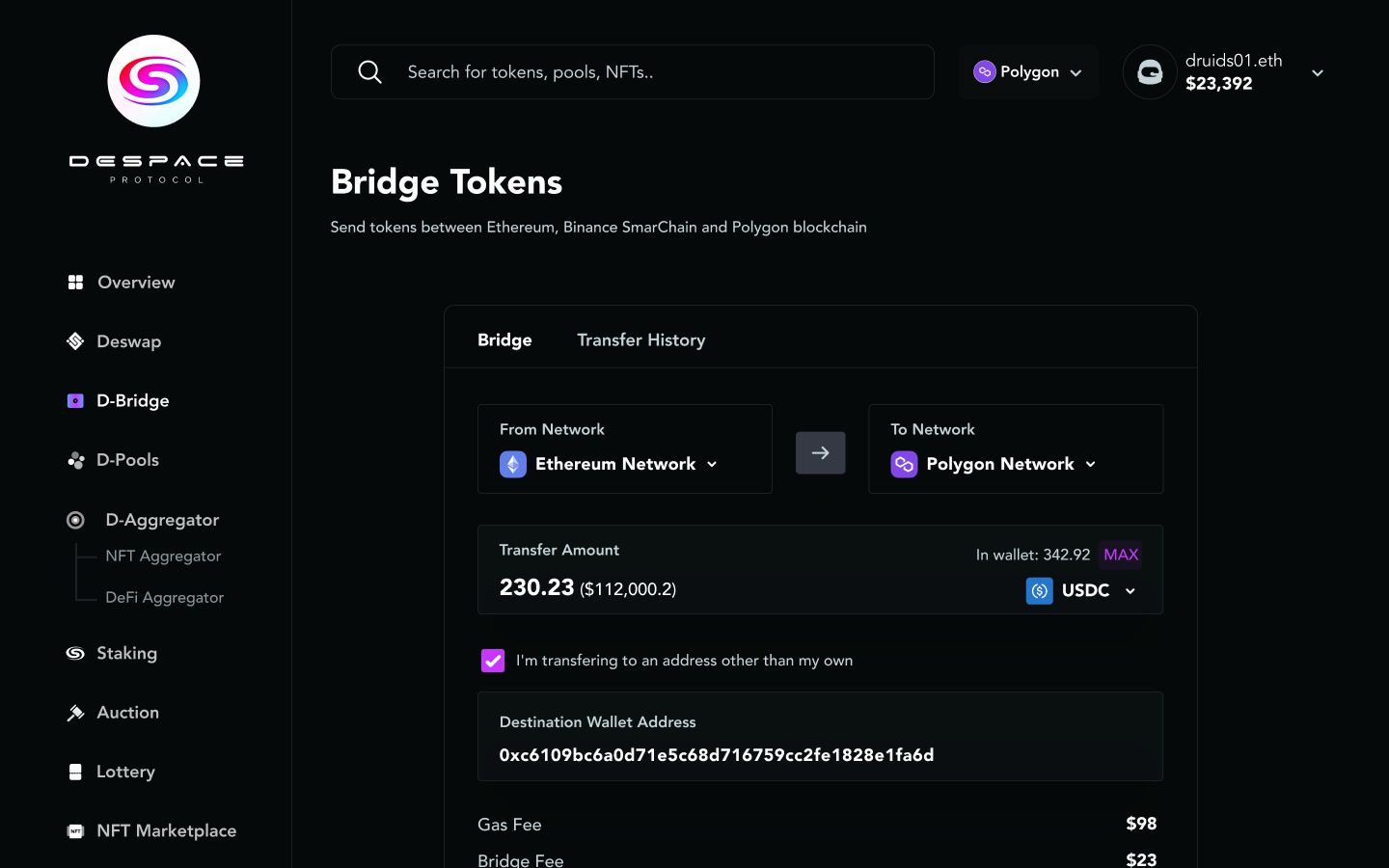
- Bridge — moving tokens between Ethereum, BNB Chain and Polygon, with network pickers, amounts, a destination address and the gas and bridge fees laid out before you confirm.
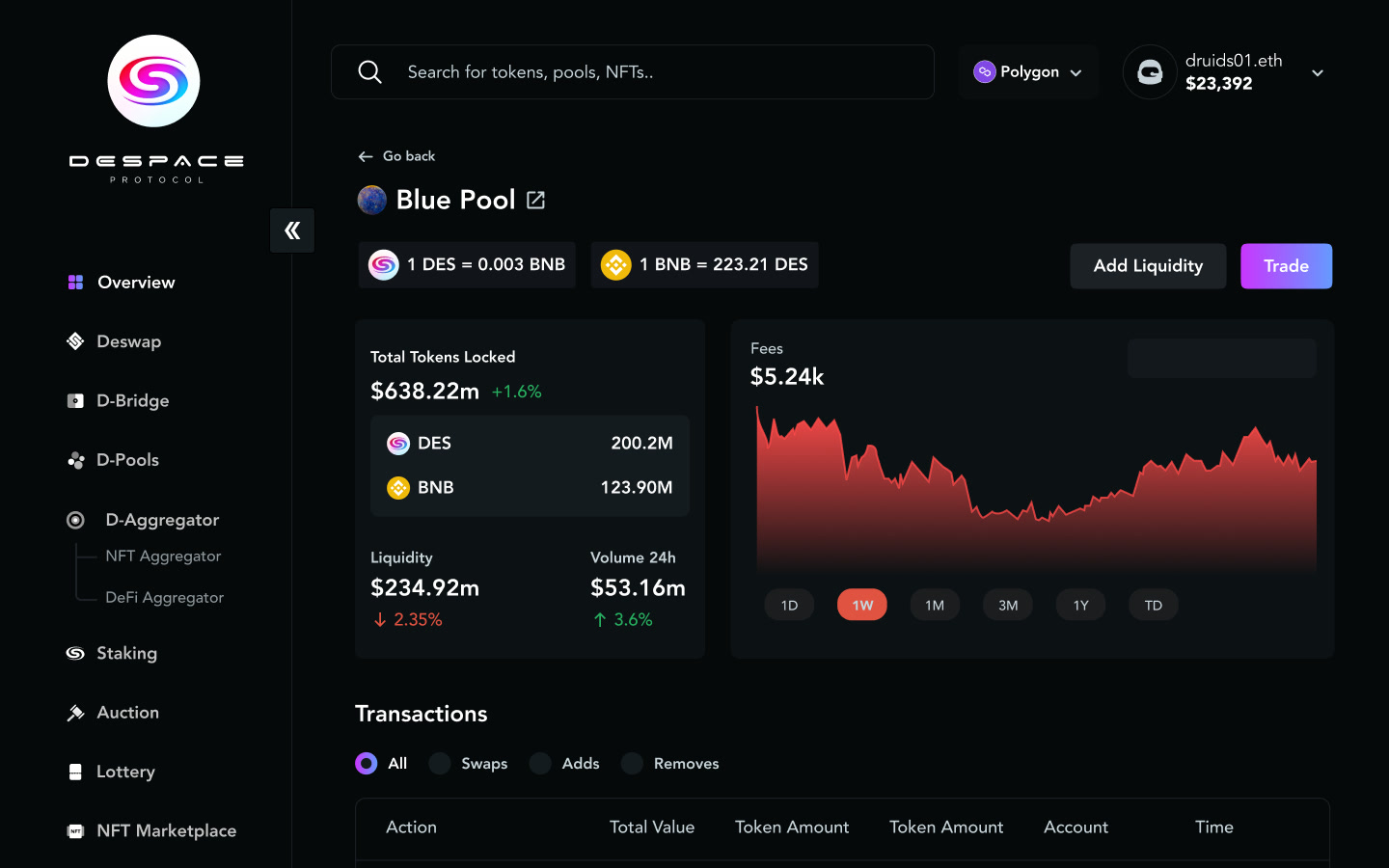
- Pools — liquidity pools with TVL, fees, volume history and a live transactions table.
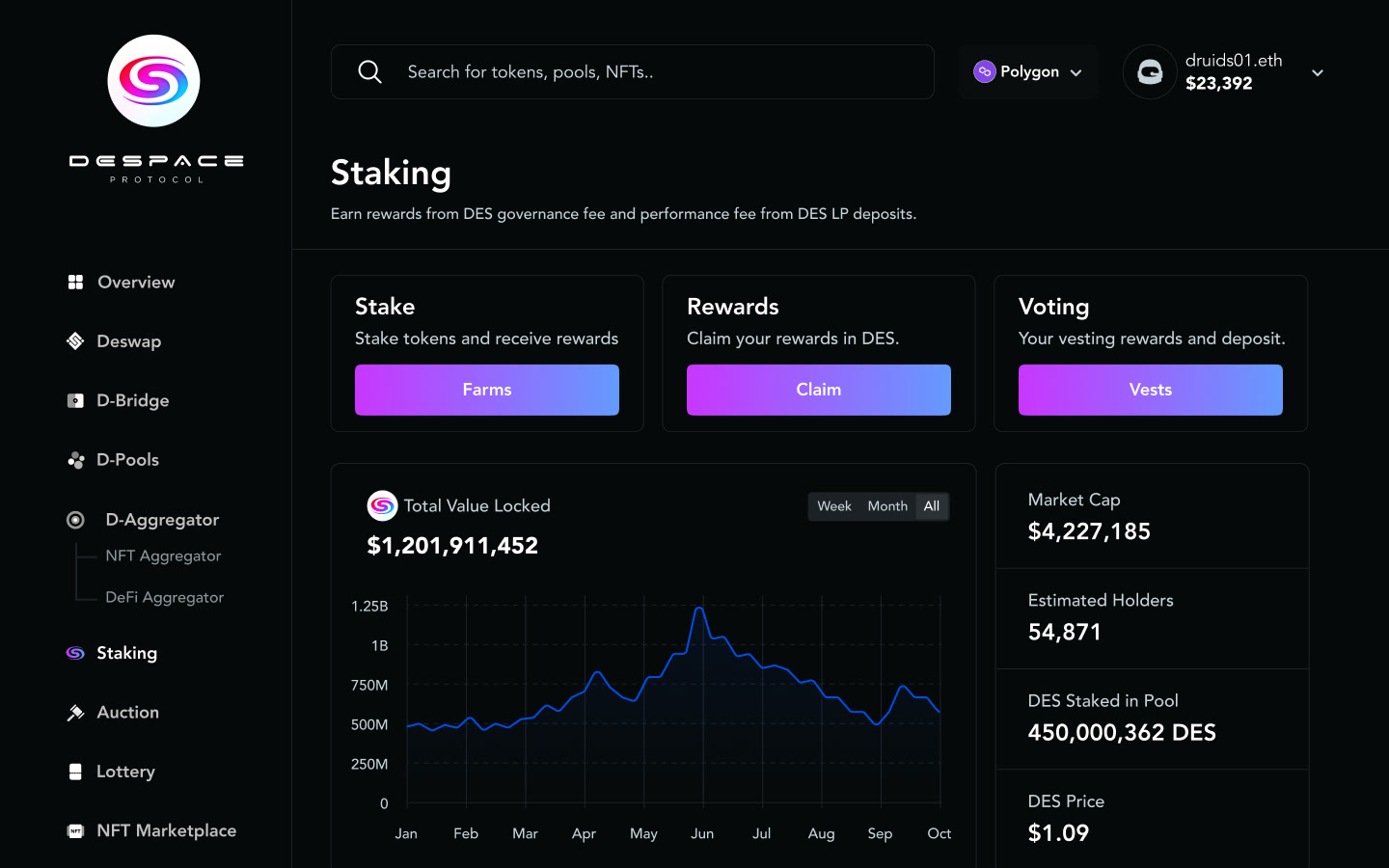
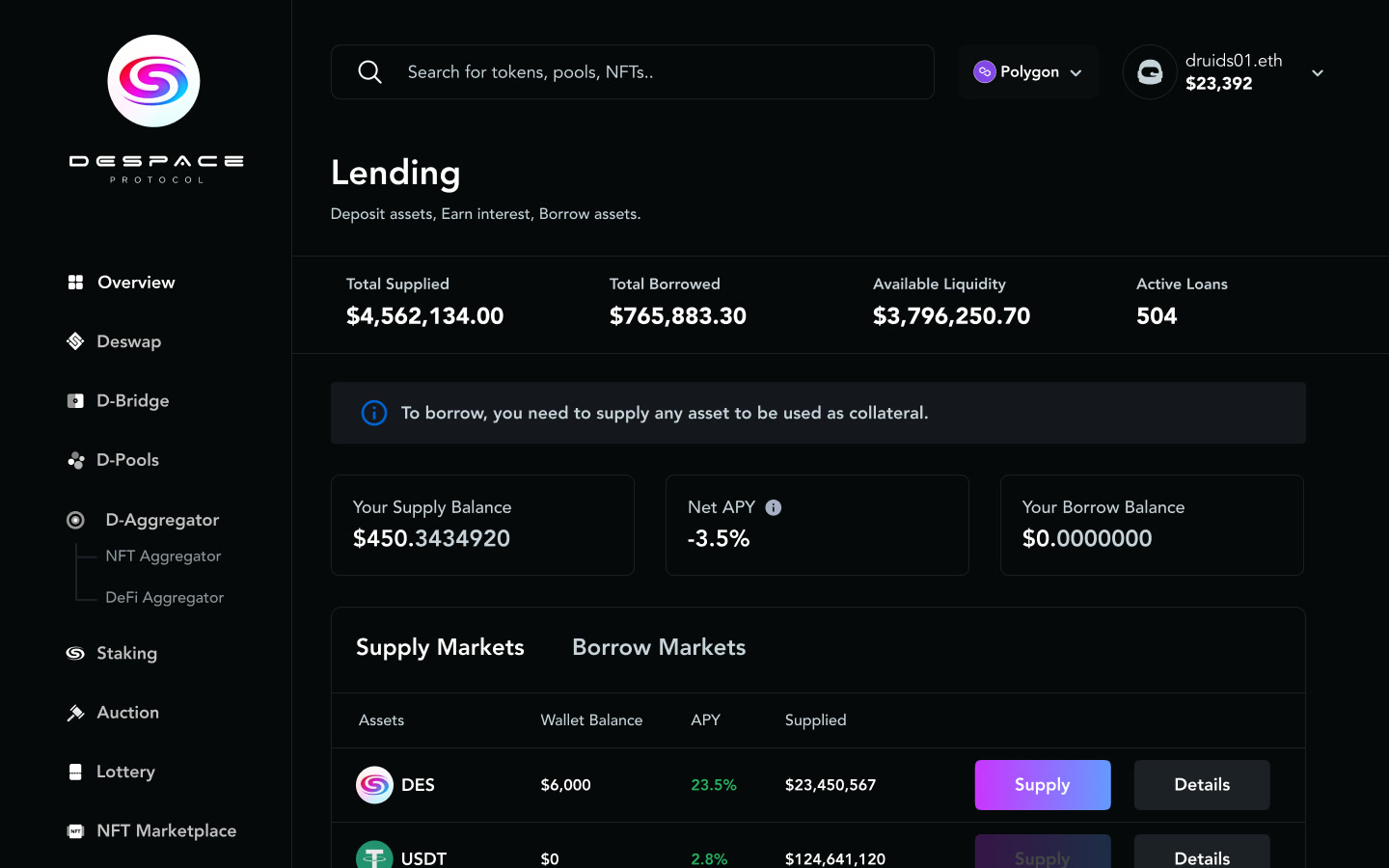
- Staking and lending — farms, rewards and vesting; supply and borrow markets with collateral rules surfaced in the UI.
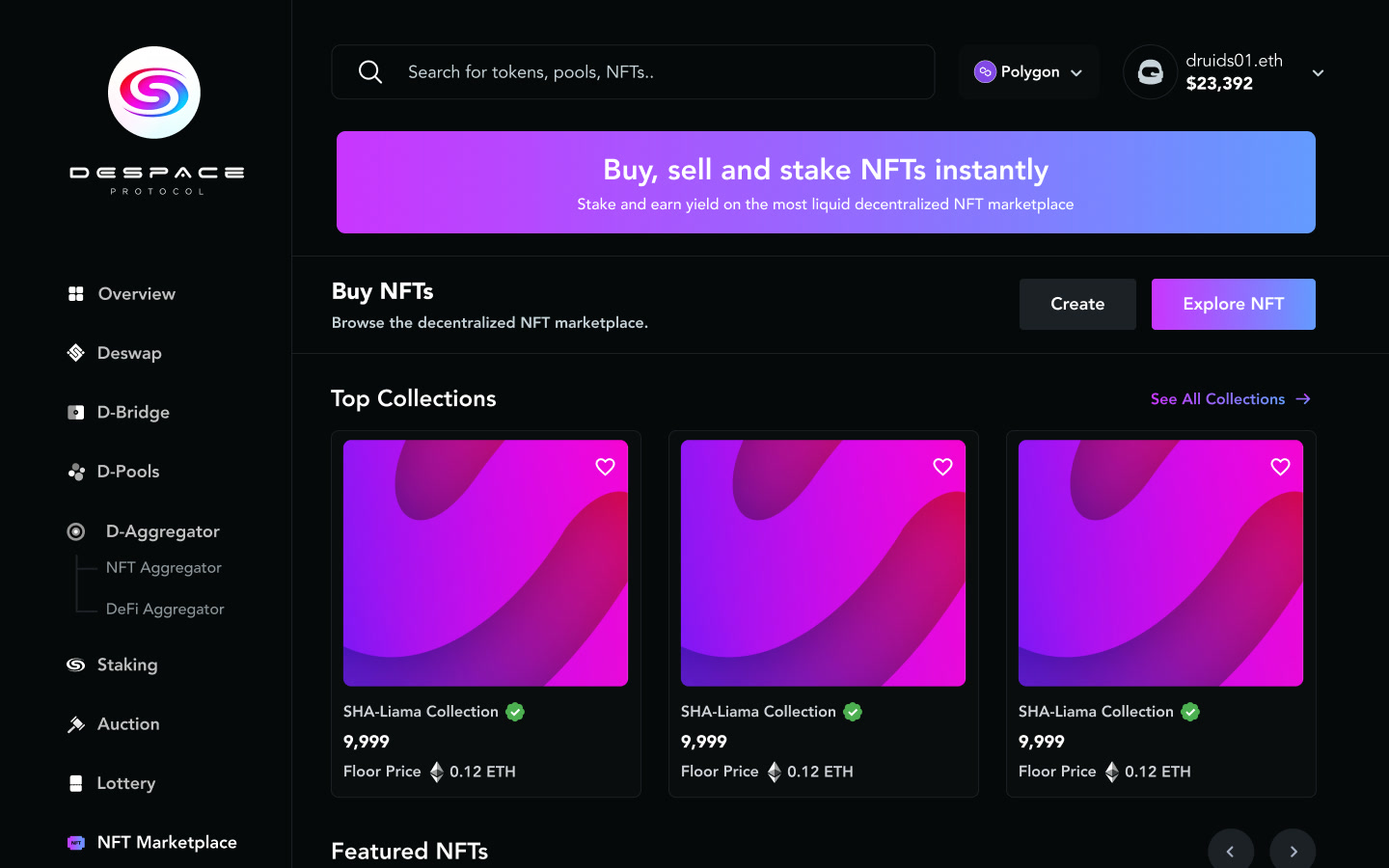
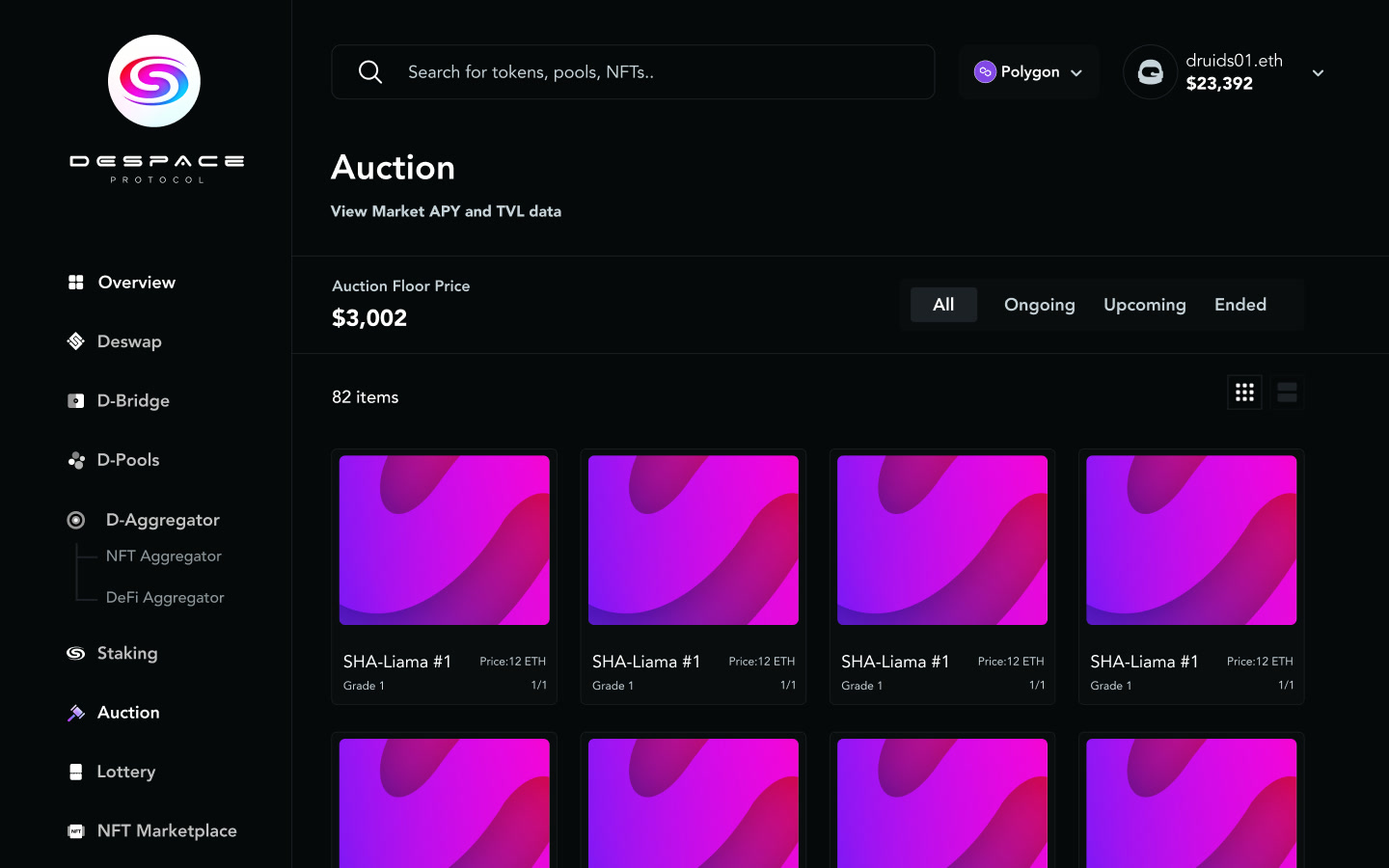
- NFT marketplace — collections, listings and timed auctions.
- A custom Bitkeep wallet connection, alongside the standard connectors, so users of that wallet weren't left out.
The hard part
A DEX front end is mostly state that someone else owns: balances on three chains, prices that move every block, transactions that are pending, then confirmed, then sometimes not. I re-architected the core frontend modules so that state had clear owners and the screens stopped re-deriving it — a roughly 20% efficiency gain and 5% fewer bugs.
Then performance: moving the heavy pages to Next.js server-side rendering cut page load time by 30%, which matters a lot when the first thing a trader sees is a chart.
Outcome
- Contributed to a 15% increase in daily trading volume.
- One interface across swap, bridge, pools, staking, lending and NFTs, on three chains.